
When designing or optimizing a drive system, you are often faced with an important choice: which type of gearbox is most suitable for your specific application?
The right choice can have a major impact on the efficiency, service life and ultimately the Total Cost of Ownership (TCO) of your machine.
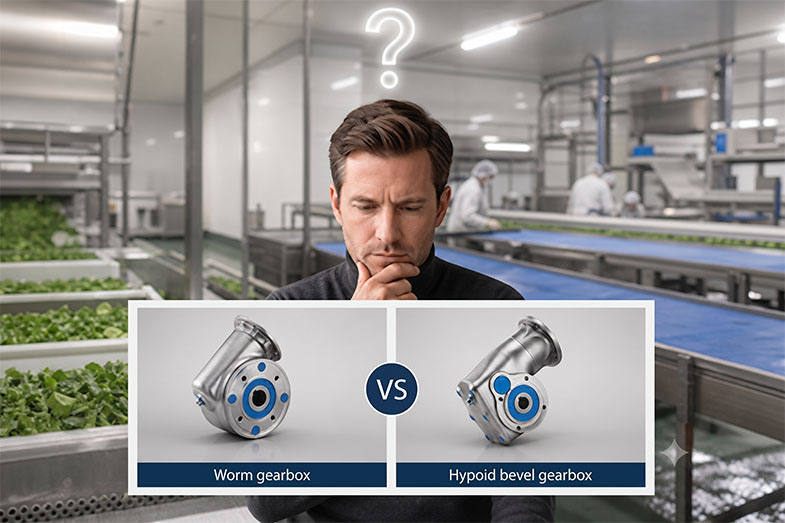
Although the stainless steel worm gearbox (Series FVS) and the stainless steel hypoid bevel gearbox (Series FH) both serve the same basic purpose, namely transferring power from a motor to a driven shaft while reducing speed and increasing torque, they do this in a fundamentally different way.
1. The Stainless Steel Worm Gearbox
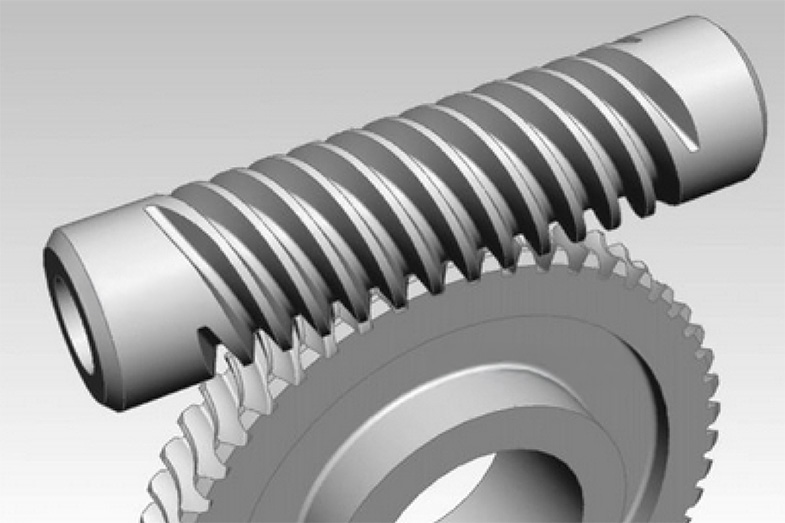
The worm gearbox is one of the most well-known and traditional drive solutions. The mechanism consists of a worm (a shaft with a trapezoidal thread) that drives a worm wheel (a toothed wheel). The shafts are positioned at a 90-degree angle to each other.
The advantages:
- Compactness and wide range: A worm gearbox is very compact because it can achieve a large reduction in just one stage. The FVS series offers gear ratios from 7.5:1 up to as much as 100:1.
- Versatile use: Standard equipped with hollow shafts in various sizes (14, 18, 25, 28, 30 & 35 mm).
- Costs: Compared to other technologies, they are generally relatively inexpensive to purchase.
- Low noise: Due to the sliding action of the gearing, they are generally very quiet.
- Self-locking: At higher gear ratios, the gearbox can be self-locking, which can be an advantage in certain applications.
Point of attention: Efficiency and service life
Due to the sliding action of the gearing, the energy efficiency is lower than with other types. In addition, with worm gear reductions, the efficiency strongly depends on the gear ratio: the higher the ratio, the lower the efficiency. For standard applications or machines that do not run continuously, however, this is usually not a limitation. The attractive purchase price and extremely compact installation more than compensate for this. Only in heavy, continuously operating installations does efficiency weigh more heavily in the Total Cost of Ownership, and a hypoid bevel gearbox is often more cost-effective in the long term.
2. The Stainless Steel Hypoid Bevel Gearbox
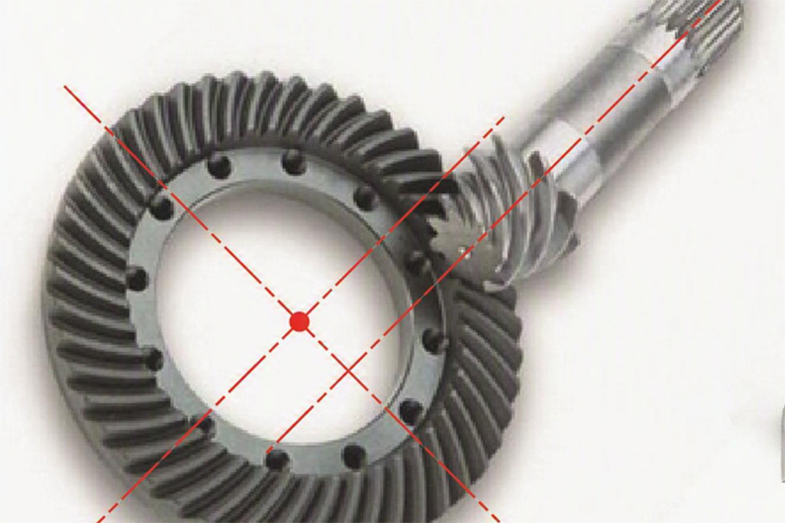
The hypoid gearbox offers the same practical right-angle design, but instead of the traditional bronze/steel combination, it uses hardened gears.
The advantages:
- Extremely high efficiency: The FH series offers high efficiency of 94% in a 2-stage version and 92% in a 3-stage version, making it highly energy-efficient. With the right selection, you can often even use a smaller motor power to achieve the same torque as with a worm gearbox.
- Long service life: The hardened gears provide a significantly longer service life compared to conventional worm gear transmissions.
- Impressive range and power: These gearboxes offer gear ratios from 7:1 up to as much as 300:1, with a maximum torque of 500 Nm. Standard hollow shaft diameters are 20, 25, 30 and 35 mm.
Point of attention: Investment value
Producing hypoid gearing is more complex. As a result, the initial purchase value is slightly higher than with a worm gearbox. Thanks to the high efficiency and minimal wear, however, this additional investment quickly pays for itself in continuous operation through lower energy costs and reduced maintenance.
Which gearbox is the best choice?
The “best” choice does not exist; it depends entirely on your application.
- Choose the FVS Worm Gearbox if you are looking for an economically attractive and hygienic solution for applications that do not run continuously.
- Choose the FH Hypoid Bevel Gearbox if you aim for a lower energy bill, want to guarantee maximum service life and your installation runs regularly or continuously.
The role of TCO (Total Cost of Ownership)
Within modern production processes, the focus is increasingly shifting from the initial purchase price to the Total Cost of Ownership. Although the hypoid gearbox (Series FH) is more expensive to purchase, the energy savings can be substantial. Because you can often use a lower power rating and the service life is substantially longer, choosing an FH drive results in a much more cost-effective solution in the long term.
The choice of the right motor type, such as an energy-efficient IE4 or IE5 motor, can also significantly reduce operational costs. Read more about choosing the most cost-efficient and energy-efficient electric motor for your application.
Would you like to know which stainless steel gearbox best suits your machine or conveyor system? Or would you like to learn more about the benefits of a stainless steel gearbox in wet and hygienic environments? Contact the specialists at Dertec. We will be happy to advise you on the most efficient and hygienic solution for your application.